Abstract
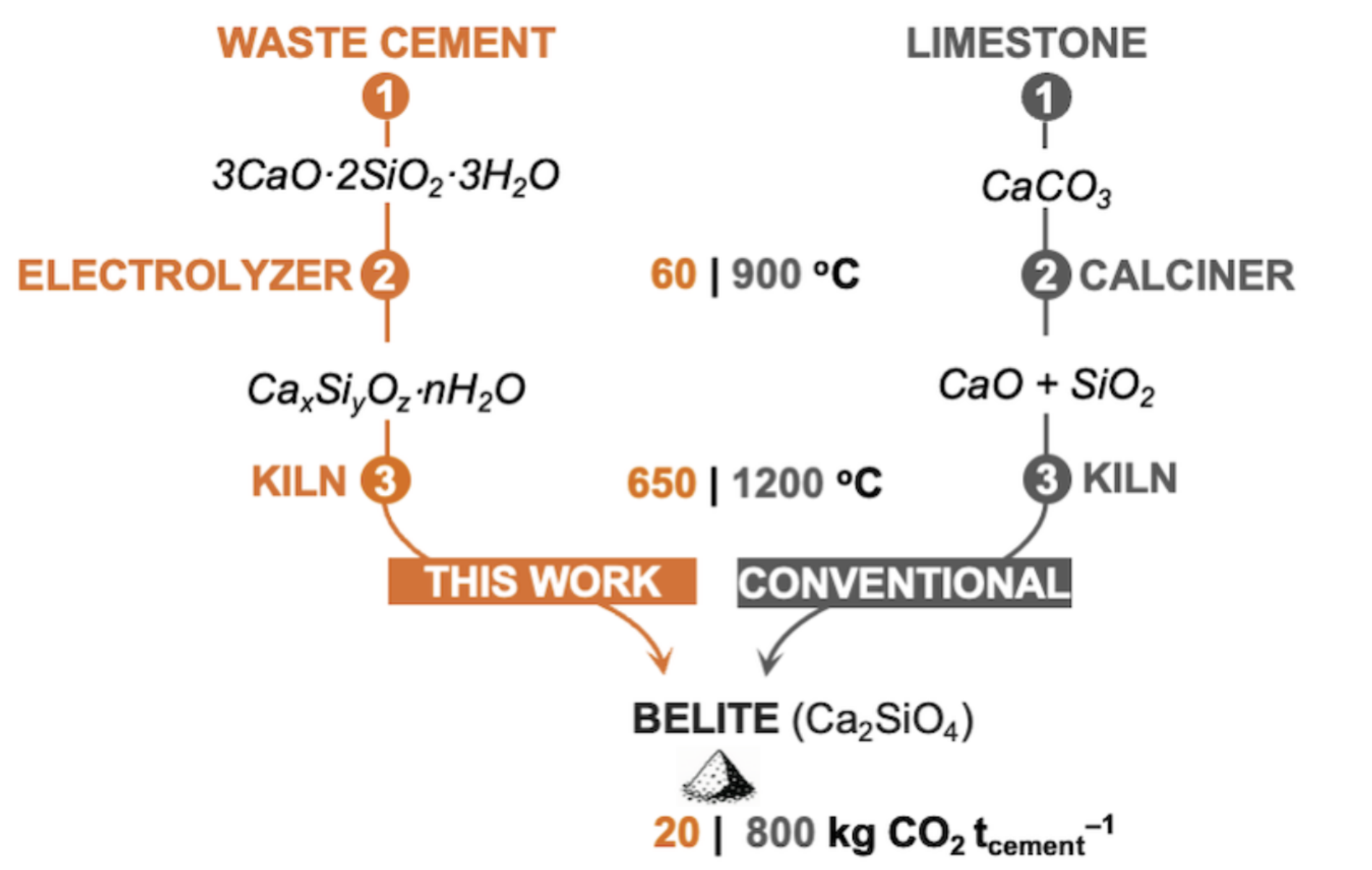
Ordinary Portland cement clinker consists predominantly of tricalcium silicate (alite), along with concentrations of dicalcium silicate (belite). Belite forms at lower temperatures than alite (1200 °C c.f. 1500 °C). Here, we report a continuous electrochemical reactor that uses electricity to convert limestone and silica into calcium silicate hydrate (“eCSH”). When heated, this eCSH is converted into belite. Importantly, this belite formed at merely 650 °C (c.f. 1200 °C when formed from conventional limestone and SiO2). We also show we can form eCSH and, in turn, belite from waste cement, a process calculated to emit only 20 kg of CO2 per ton of belite-rich cement clinker (c.f. 800 kg of CO2 per ton of ordinary Portland cement clinker). This study therefore presents a credible path for decreasing the thermal demand and CO2 emissions for cement production by 70% and 98%, respectively.